


★★★★★
I sat down in the cinema not knowing quite what to expect from Happyend. A foreign language film described as both ‘coming-of-age’ and ‘dystopian’ with a juxtaposing fairytale title, it promised to at least offer something different. After two minutes, I knew it would be great.
Happyend is the latest by director and writer Neo Sora. Set in a near-future Tokyo, it follows school friends Kou (Yukito Hidaka) and Yuta (Hayato Kurihara) as they navigate their final year before graduation against a backdrop of a looming dictatorship. The opening scene is compelling, Sora demonstrating the dynamics of the group through their plotting to invade an exciting underground club (whilst still in school uniform). Moreover, he exercises an impressive level of restraint in the film’s world-building: this sci-fi needs no narration or Star-Wars style paragraphs to convey a future dangerously entwined with technology that is disturbingly close to present day.
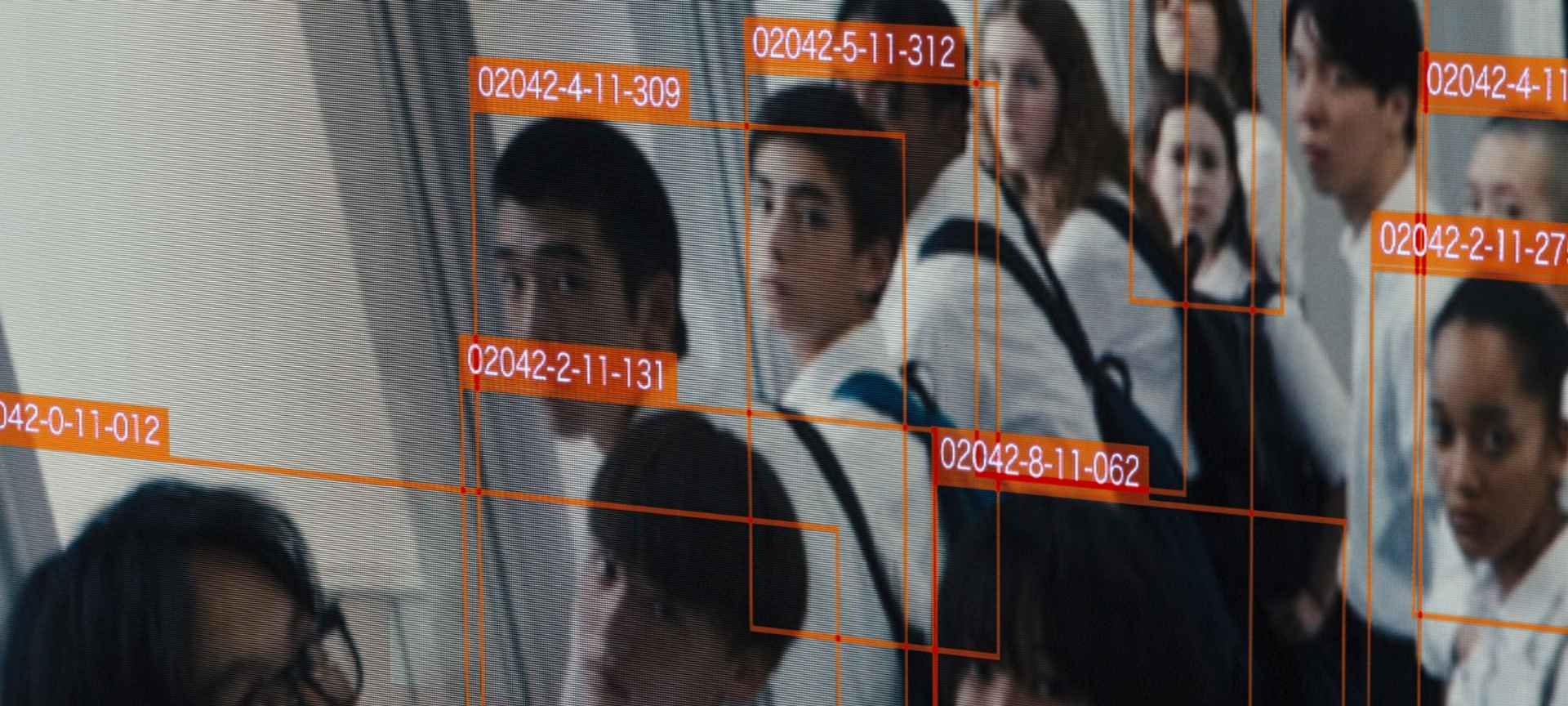
Kou and Yuta play a prank on their headteacher one night which catapults a series of events, the most significant of which is the implementation of an Orwellian surveillance system within the school that scans students’ faces and removes points for misbehaviour. Authoritarianism within the school acts as a microcosm for the whole of Japan, and students, despite their young age, are forced to make a choice: who will rebel, and who will conform? The uneasy presence of political turmoil and invasive technology catalyses tensions between old friends, slowly repelling the rebels and the conformists like magnets. Sora’s understated cinematography achieves a sense of longing, nostalgia and acceptance of change that makes the coming-of-age genre. He captures both the internal intensity of fracturing friendships and their dull exterior, lacking the drama of high-school breakups but suggesting they are all the more heartbreaking.
Although Happyend focuses on Japan, the presentation of political turmoil and criticism of rising fascist ideology feel universal. Viewers unfamiliar with Japanese/Korean history may scoff at the discrimination Kou faces as a Korean despite his ancestors being in Japan for ‘four generations’ but in fact this commentary is not far removed from cultural truth. On-screen crowds whisper of England’s right-wing protests as they pose an uneasy threat to the rights of Japanese-Koreans like Kou’s family. In this, Sora’s film is undeniably aware of itself as both a product and influential piece of culture, and perhaps this is why it lends itself to a general atmosphere of optimism. However, Sora stated that ‘he wasn’t “intending for any change within society”‘, instead that the film ‘encapsulat[es] an emotion he felt in his early twenties’. This was palpable, as, watching it, I felt called to action against conformity, authoritarianism, discrimination and AI.
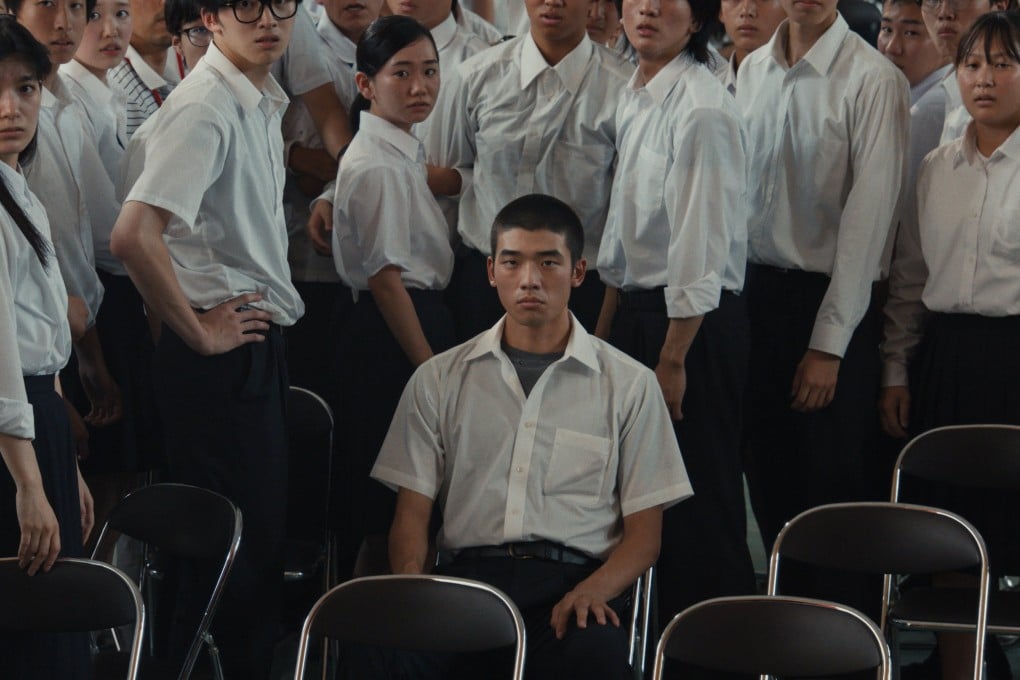
Despite the layers of depth and some serious themes, the film is light, funny, and imminently watchable – which makes it all the more triumphant. A sweet romance blossoms between Kou and fellow classmate of high anti-authoritarian principles Fumi (Kilala Inori) but their attraction is nicely understated, bringing lighthearted scenes without it taking over the narrative. In one of my favourite scenes, we hear Fumi on a rant about the political state of Japan but the shot focuses entirely on Kou, whose eyes are filled with affection. Also, despite the serious political backdrop, there are plenty of scenes of kids just being… kids. They pop up from behind doorways, do mock voiceovers, put their middle fingers up to the cameras, DJ in secret. The platonic chemistry between characters is the glue that holds this film together and it really succeeds.
Music plays a vital role throughout, which I enjoyed. The film begins with rebellion: teenagers sneaking off into a club, seduced by love of techno music. Over time, the music itself becomes a powerful anti-authoritarian symbol. The friends’ ‘Music Research Club’ is of deep importance to them, and this is no coincidence. Music, something so deeply human, is perfectly at odds with a high-tech, dystopian, near-future society. Fittingly, the score is piercingly beautiful, perfectly encapsulating the simultaneous feelings of nostalgia and excitement that permeates late teenage years.
The film is refreshingly not formulaic – I really had no sense of how it would end. But, it is the sign of a good writer that by the time it did, I felt a deep fondness for each of the characters. Happyend is deeply touching, and unlike anything I’ve ever seen.


