


Fire Emblem: Fortune’s Weave is the latest masterpiece in Nintendo’s long-running strategy franchise, but it can be a daunting game to try and conquer for yourself. As such, here’s some useful tips from someone who has beaten Fortune’s Weave in around 85 hours. While this does cover elements from the game’s second and third Parts, there will be minimal story spoilers.
One save
Unlike other Fire Emblem games, Fortune’s Weave only provides the player one save slot. If you want to replay the game, you can do so through the Obelisk Chamber, which allows you to restart chapters or routes. Keep in mind that if you do, all your progress for that route – including quests – will be reset alongside unit recruitment. However, support levels carry through replaying chapters so you can easily recruit units if you have met other conditions. You can restart a chapter early on after raising Support Ranks to save turns but it’s not necessary.
There is also autosaving which occurs before and after entering a new battle or dungeon, alongside when entering Dagsion or the world map. This overrides your previous save, so make sure everything is in order before proceeding to a new autosave spot. This system encourages greater time management, though you can always reset to a previous autosave to save some turns.
Time management
Fortune’s Weave boasts four routes in its Part 1. Each route is largely distinct from each other, and you can swap between them at any time. Doing all of them took me 60 hours.
However, I’d advise you beat one route before going to the next. Completing one route can allow you to focus on recruiting more unique units on a different route so there’s less overlap. While that can have its benefits as will be discussed later, it can take time away from recruiting other unique units. Recruiting all units is fairly easy to do and can be done across multiple routes, so you don’t need everyone on a single run. The routes will merge later in the game, meaning there’s no need to worry about leaving anyone behind.
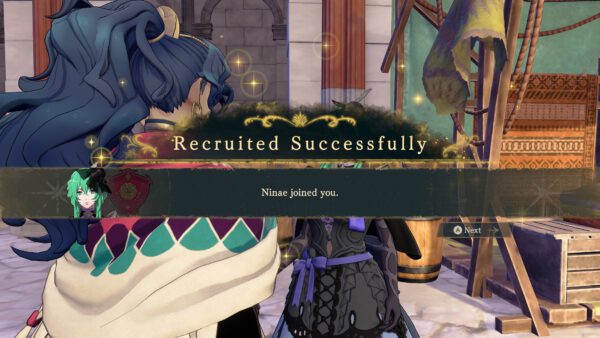
Certain subquests are automatically completed on other routes if you do them on a different one, so renown and money aren’t likely to be an issue if you manage your time well. These however do not include Paralogues, which are optional story maps focusing on the protagonists and major side characters. These have extremely strict time limits but are very much worth doing, so check the in-game calendar at the start of each chapter or look up their availability.
Dietrich’s ninth chapter is especially noteworthy here. Normally when you run out of turns in the overworld, you are teleported to the destination. This is not the case here; if you run out of turns, you will be forced to restart the chapter – I am speaking from experience. This is doubly troublesome as there are some Paralogues available here with stricter-than-usual time limits. Bertrand’s in particular is only available for one day on this route and leaves you with just enough turns to get to the objective. Talimun’s Paralogue is available around the same time but you will not have enough time to do both, so I’d recommend you save Talimun’s for the next chapter. Bertrand’s is also necessary for recruiting Gaitz, a unit exclusive to Dietrich’s Route.
If you have little else to do in Dagsion, focus on auto activities to let your units level up during downtime. You can also partake in weekly activities such as going to the theatre, eating meals, training at the arena and maintaining temples. The former two are very useful for building support ranks while the latter are great for battle and support. The temples can give blessings by each god that carry over between playthroughs. Kalla’s blessing is easily the most useful in my experience, being a lifesaver in Part 2 and 3. She grants extra evasion to your playable units, preventing a good chunk of enemies from even touching your team.
Route order
While each route is meant to work well as a first choice, there’s still a more advisable order. Cai’s route has the most limited world map and is meant to be the starter route through greater tutorials and gradual introduction to the mechanics. If you’re worried about his story being less interesting than the others, don’t be; it’s still extremely good.
Leda’s follows naturally from Cai’s story with expansions to the world map, so it works great as a second pick. Dietrich’s route contains many elements familiar to players of Three Houses but it’s advisable that his route is done after at least two others are completed if you wish to do them separately. Dietrich’s unique ability is Answerer Call, which summons enemies for renown. However, it’s largely useless and not worth engaging with unless on Hard Mode in order to increase the power of Combat Arts. It generates an insignificant amount of renown and is the primary source of renown, so it’s best to do the subquests on two previous routes first.
Theodora’s is the most fitting to be done last of the four routes, leading perfectly into Fortune’s Weave‘s second act. By this point, the world map will also be completed, and available to explore in entirety.
Part 2
While you can go through the second Part with all four routes, it’s only worth doing if you have plenty of time to spare in real life. Part 2 is the shortest of them all, lasting around six hours on Normal Mode, but the changes between routes are minimal. Fortunately, you can skip Part 2 on other routes and have all of your other characters automatically level up to be prepared for Part 3. While the gains aren’t especially useful unless you’re on Hard Mode, it’s still a very good time-saver and Part 3 grants a lot of EXP anyways.
As alluded to, this Part focuses primarily on Theodora, and the protagonists of other routes act instead as side characters. The battles are a lot more difficult and complex with large swarms of enemies. As such, I recommend you take great care in recruiting absolutely everyone. Despite this, you can only bring in the roster for one route in one run of Part 2. Make sure you go with a route where you have recruited plenty of units already as the maps demand a large force to tackle them. Guzran is also arguably the best unit in the game due to excelling in all combat areas. He’s recruited through the story in Cai’s route but is fairly easy to recruit in the other routes as well, so make sure he’s on your Part 2 team.
My personal recommendations for which Part 2 character you should follow are Leda and Dietrich. Leda gains access to the Dancer class, an extremely useful class which allows an ally unit to move again. Dietrich is also just the best of the protagonists in terms of combat prowess.

Both routes have two characters you can only recruit here, not on the other two units. Creek requires you to do a Part 1 quest, only accessible in Dietrich and Leda’s routes, before you then having to defeat him in Part 2’s second chapter. Subsequently, Nathan requires you to beat him in the next chapter with Creek. Both are useful units worth getting as they’re primarily mounted units, something Part 2 and 3 definitely favour. Aswan and Tahonia are recruited in Part 3 but are first seen in battle in Part 2’s third chapter. You must keep them alive if you want to use them in the next Part, but if you’re on Casual Mode (which disables the game’s permadeath mechanics), they can still fall in battle and you can recruit them.
Part 3
The most difficult segment of Fortune’s Weave is its final act. The maps have plenty of bizarre gimmicks through miasma, but they can be dealt with well through Eshmel or Orchel’s Blaze Arts if you can keep an eye on your HP. It’s actually very easy to do most of the content, as you get gradual access to more squads you can send out simultaneously. My recommendation for the endgame is to have a squad headed by each of the four lords, with each squad also including one of the sub-lords (Talimun, Betrand, Anatolia and Orchel). Those are only available if you do their respective Paralogues, though all of the routes merge by this point and you’ll likely have a large roster to work with. Theodora should be the leader of one of your first squads as her Battalion ability is extremely useful for gathering resources necessary to rebuild locales. Cai’s farming ability should also prove useful.
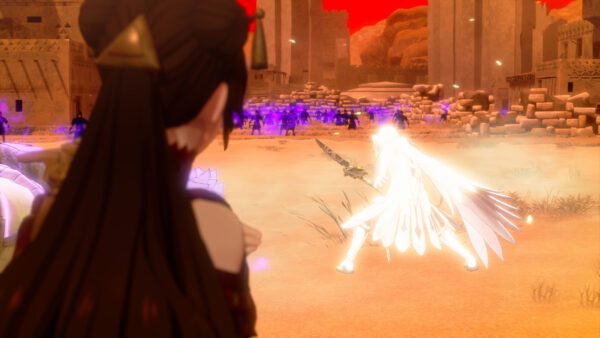
When tackling the main battles of Part 3, bring your squads together so you can combine their strengths. Because of the multiple squads, time management is not an issue, nor is EXP as dungeons are reset with higher-tier enemies and treasures. Reserve party members also gain passive EXP at the end of each turn so, while they won’t be as strong as your primary units, they will still be worth using if you need back-ups.
You can merge units you recruit on multiple routes using shards. These shards are gained long before this point and can be used for reducing costs and increasing EXP. It’s only worth utilising shards on increasing regular EXP and not class EXP, reducing cost of facilities and increasing just a few blessings if you plan on recruiting a lot of characters in multiple routes. One final unit joins in Part 3’s sixth section, but you just need to keep him alive in the previous section. Again, this won’t be an issue on Casual Mode.
Those were a few tips for Fortune’s Weave. It can be a monolithic game, but pace yourself and you should be fine. Fortune’s Weave is an incredible experience and well worth the time investment, should you have it to spare.


